
GLM-5.4 Released: Z.ai Adopts a Looped Transformer Architecture
Z.ai has launched GLM-5.4, their first large language model to use a looped transformer, available via a special Coding Plan. This architecture aims for more effective deep learning without increasing model size.
What changed?
Z.ai has released GLM-5.4, the first model from the lab to employ a looped transformer architecture. In this arrangement, a group of weight-shared transformer layers executes multiple iterations over the hidden states instead of just one, as in a standard transformer. This enables the model to deepen its representation without increasing the parameter count. Access to GLM-5.4 is currently restricted to Z.ai's Coding Plan subscribers via their OpenAI-compatible API; open weights are not available.
Why does it matter to an everyday developer?
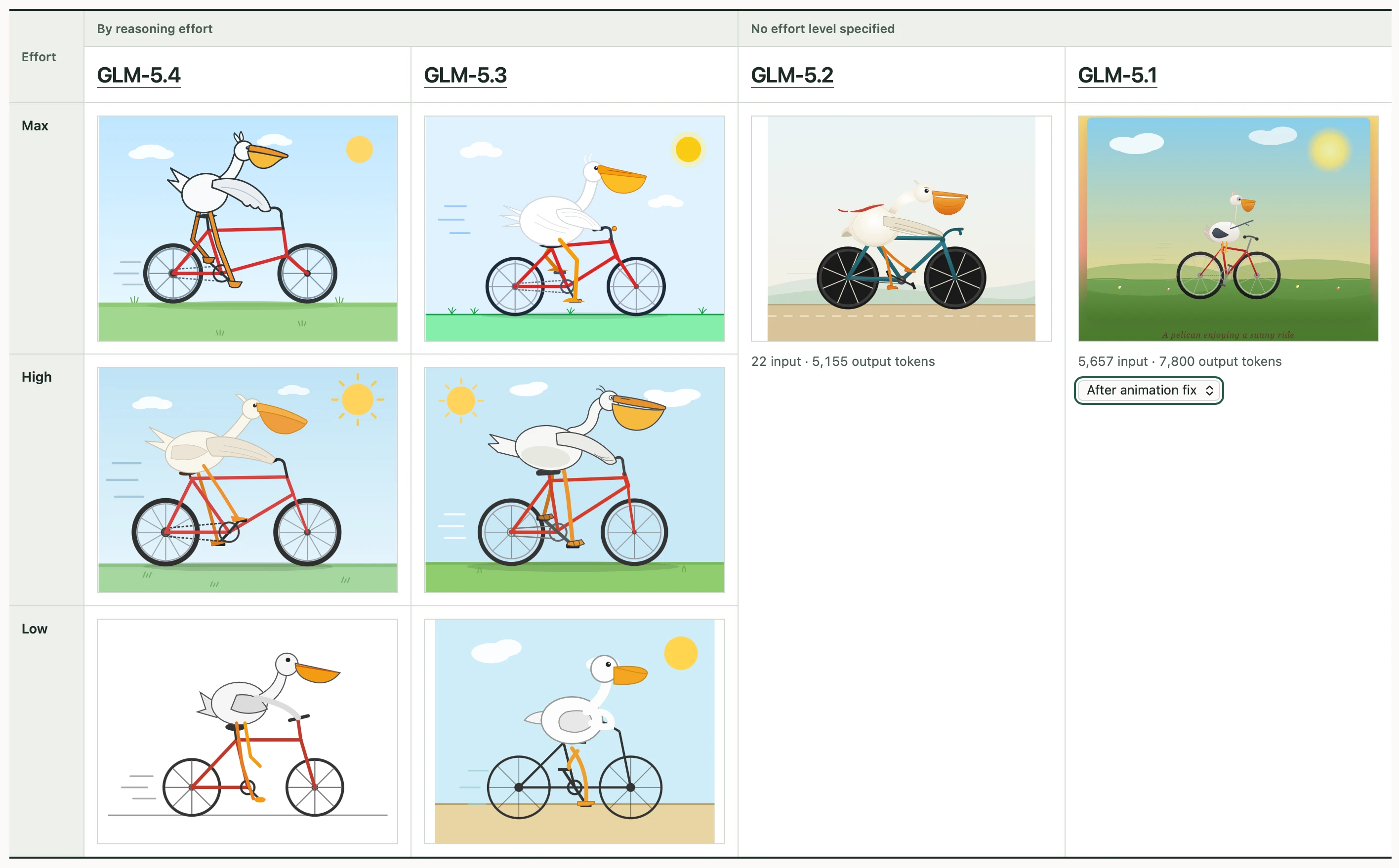
The move to a looped transformer is a technical leap that can allow for deeper reasoning and improved performance for some tasks without a corresponding increase in model size. This may benefit developers seeking more capable models for coding and reasoning applications. However, early visual generations from GLM-5.4 are reported to be comparable in quality to its immediate predecessor, GLM-5.3, rather than representing a significant leap. For routine generation and coding tasks, the OpenAI-compatible API endpoint means minimal code changes are needed to integrate GLM-5.4 if you already support similar APIs.
What can the developer do now?
If you want to experiment with GLM-5.4, you must sign up for the Z.ai Coding Plan. You will then receive an API key that works with the standard https://api.z.ai/api/v1 endpoint, which is OpenAI-compatible. You can use existing OpenAI client libraries or community plugins such as llm-zai (or other compatible tools). Since weights are not open, self-hosting is not possible at this time. Developers already integrating with the Z.ai API can enable GLM-5.4 for their applications with minimal changes.