

GitHub Agentic Workflows Now Generally Available
GitHub Agentic Workflows is now generally available for all GitHub Free, Team, and Enterprise users. This tool enables automation of reasoning-based development tasks using coding agents within GitHub Actions, supporting new model options, improved security, and workflow templates.
What changed?
GitHub Agentic Workflows is now generally available to all users on github.com, including Free, Team, and Enterprise plans. This open source workflow automation project allows developers to automate reasoning-based tasks, such as issue triage, CI failure analysis, documentation updates, and test writing using coding agents embedded in GitHub Actions. Key updates with this release include model selection per workflow, a refreshed model inventory, support for Actions Runner Controller and Docker-in-Docker, stable budgeting tools, new workflow templates, improved agent isolation, and model routing optimized for different task types.
Why does it matter to an everyday developer?
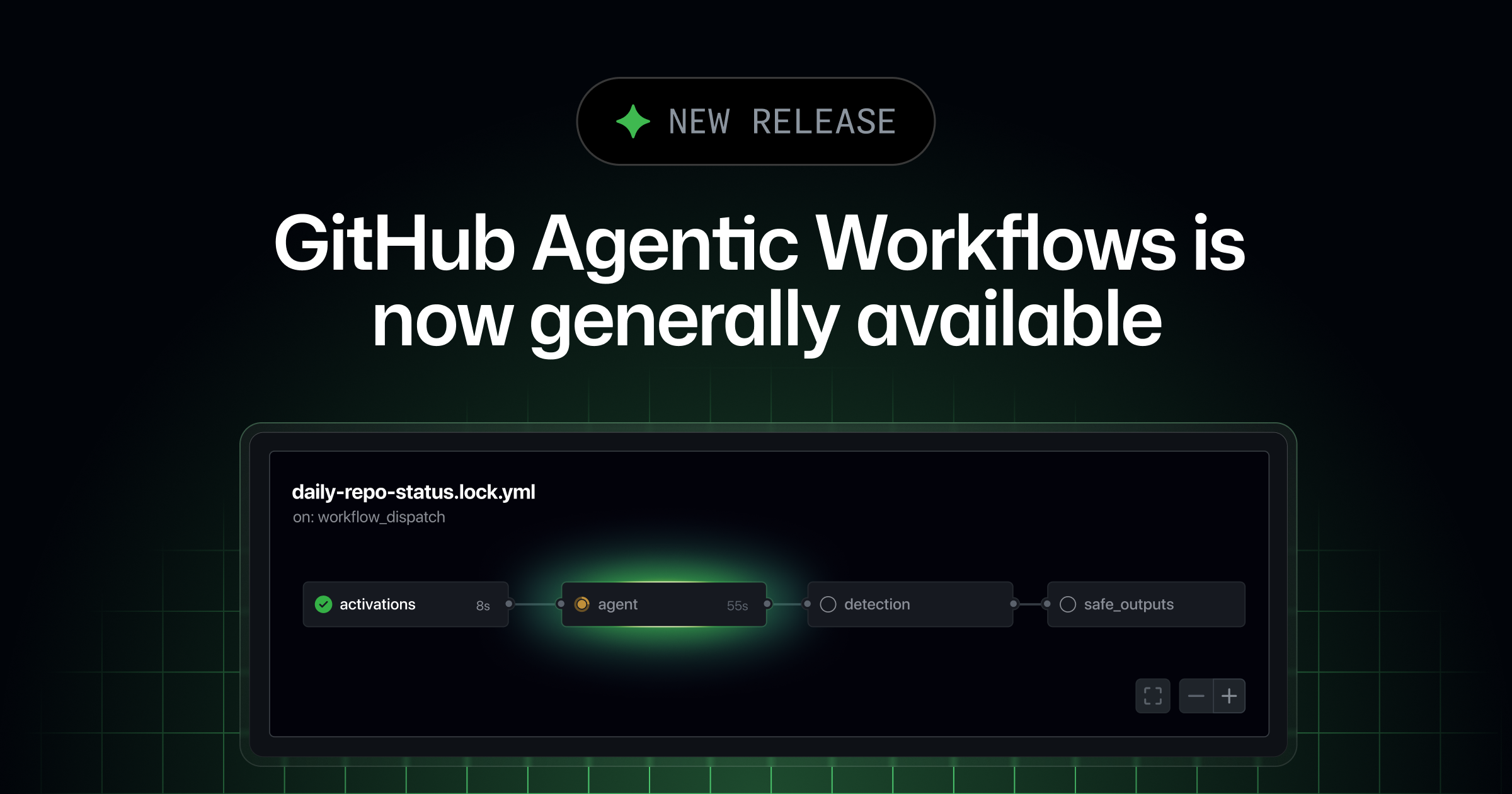
Developers can now automate complex, time-consuming tasks that previously required manual reasoning directly within their standard GitHub workflows. This enables higher development velocity, reduced production errors, and improved code quality and test coverage. Agentic Workflows can be defined in natural language Markdown, making automation more accessible. Security features such as sandboxed execution, safe output validation, and robust threat detection help ensure that automation does not introduce risk. Developers can choose between GitHub Copilot or custom agents, and leverage new workflow templates for common scenarios.
What can the developer do now?
Developers can install the GitHub Agentic Workflows CLI extension to start automating tasks. They can use prebuilt or create their own workflows in Markdown, which are compiled to GitHub Actions YAML. The system supports integrating existing runner groups and enforces policy constraints. Developers with a Copilot license can use GitHub Copilot as a coding agent, while others can bring their own models. The refreshed model inventory and workflow templates provide flexibility for a range of tasks. Enhanced isolation and threat detection features allow safe automation in production environments.