

Enterprise Live Migrations from Azure DevOps Now Generally Available
GitHub has made Enterprise Live Migrations (ELM) from Azure DevOps Services to GitHub Enterprise Cloud generally available. Teams can now move repositories with minimal downtime, continuous syncing, and lifecycle visibility.
What changed?
Enterprise Live Migrations (ELM) now allows organizations to migrate repositories from Azure DevOps Services to GitHub Enterprise Cloud with data residency. The migration process can occur while teams continue to work, thanks to continuous synchronization of repository changes. Migration can be initiated and tracked through either the Azure DevOps portal or a CLI, with pre-migration validation and detailed lifecycle tracking available.
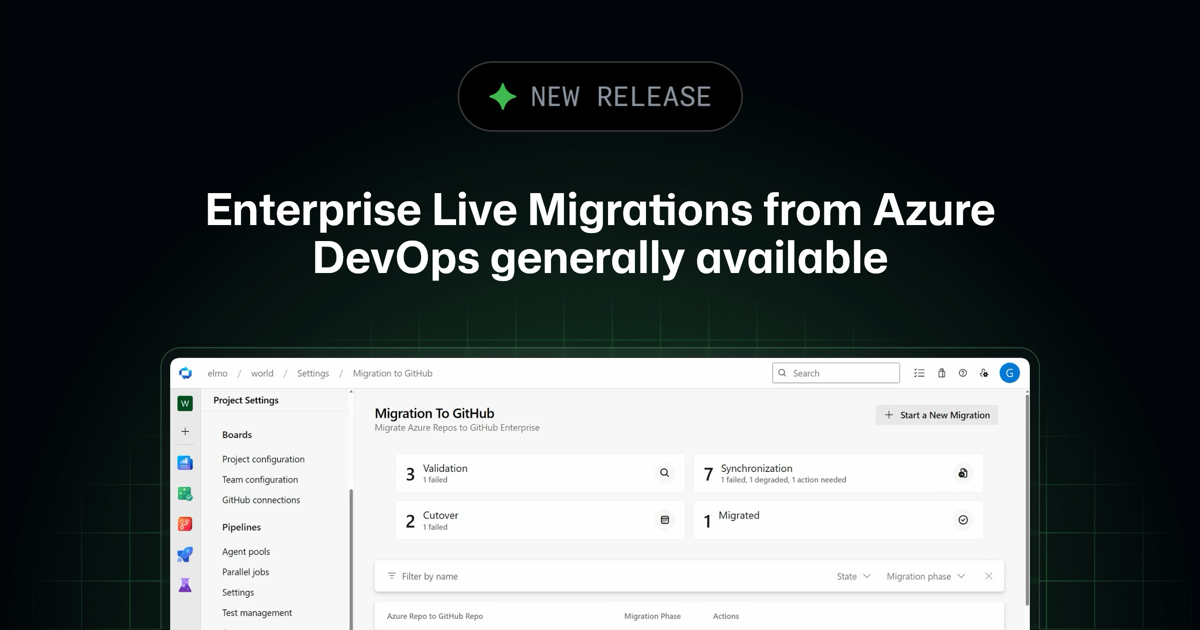
The migration preserves Git history, branches, tags, and pull requests—inclusive of titles, descriptions, comments, and user history. Azure DevOps branch policies are also migrated and automatically mapped to GitHub branch rulesets. ELM can automate the creation of Azure Boards connections and rewire Azure Pipelines to the migrated GitHub repositories. However, work items and pipeline definitions remain in Azure DevOps, requiring continued use of both platforms for these components.
Why does it matter to an everyday developer?
Developers and teams planning or executing a transition from Azure DevOps to GitHub can now do so with reduced disruption. The migration process does not block ongoing development, as repository changes are kept in sync until the final cutover. This ensures continuity and reduces downtime risks for both small teams and large enterprises. The tool also reduces manual migration steps by automating policy and pipeline rewiring, which decreases operational overhead and the potential for errors.
What can the developer do now?
Developers and administrators can start planning their migrations by visiting the Azure DevOps portal or leveraging the Azure DevOps CLI to initiate ELM. They should utilize the pre-migration validation to identify potential issues before cutover. After migration, branch rules and repository metadata will carry over, but teams will need to manage work items and pipeline definitions in Azure DevOps unless further migration support is introduced.